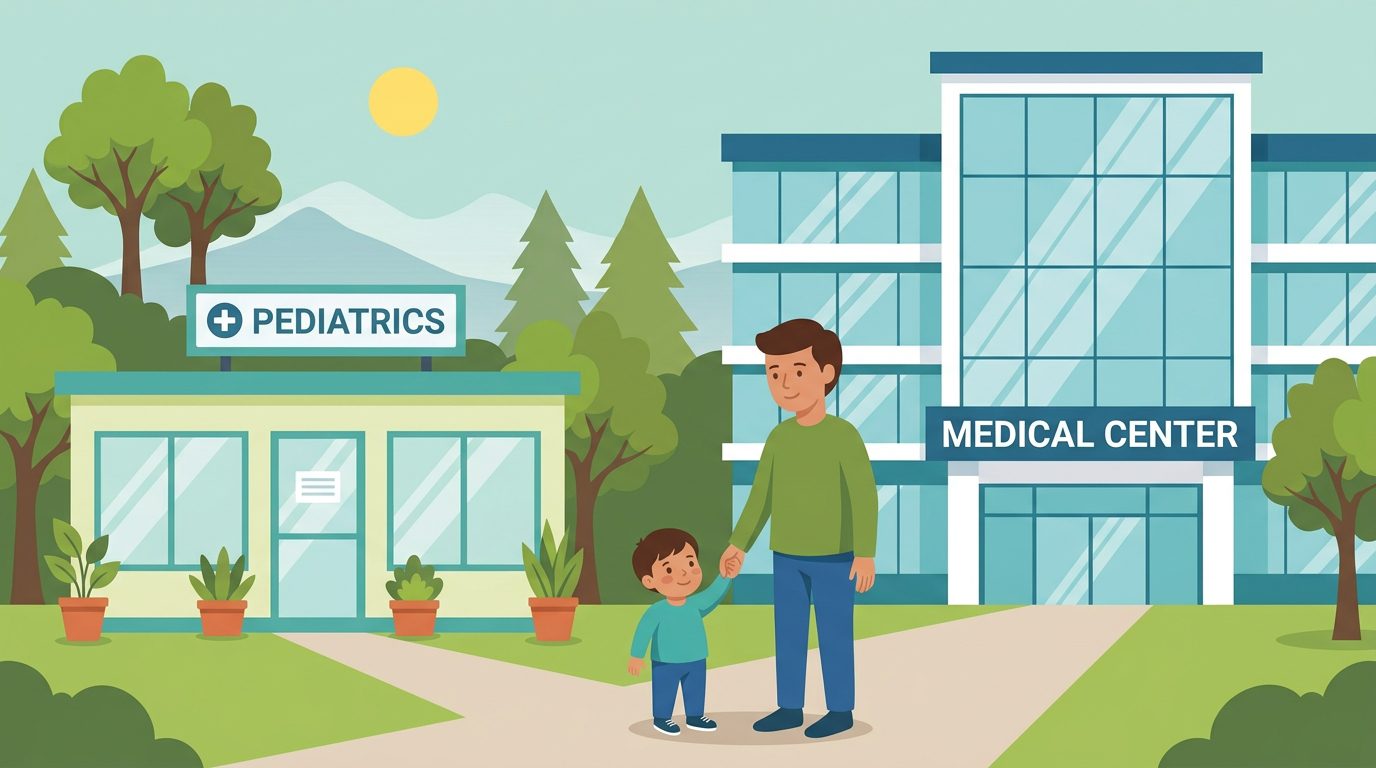
You are looking for a pediatrician, and you notice the offices near you are not all alike. One is a small local office. Another has a hospital’s name on the door, or belongs to a medical group with clinics in several cities. Does that difference matter for your child?
I’m Dr. Rani Elias, a board-certified pediatrician with over 17 years of experience caring for children and families here in Rancho Cucamonga and the Inland Empire. Alta Loma Pediatrics is an independent, physician-owned practice, so I’ll be upfront that I have a point of view. I’ll also be fair, because good pediatricians work in every kind of office.
Here is what the difference means, what it doesn’t mean, and what I would ask before choosing.
What Do “Independent” and “Corporate” Pediatric Practice Mean?
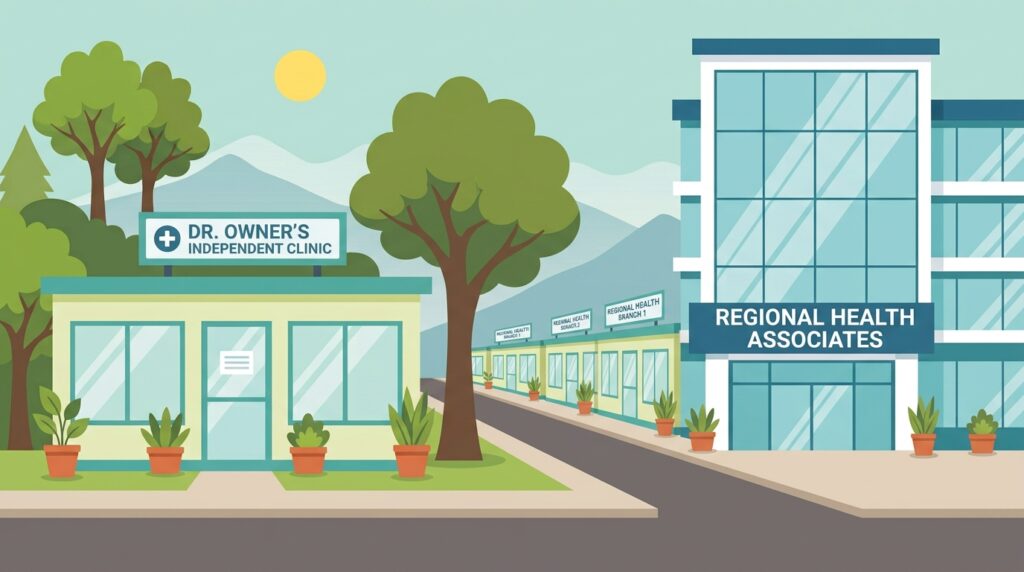
An independent practice is owned by the doctor or doctors who work in it. The people who see your child are the same people who decide how the office runs.
A corporate practice is owned by a larger organization. That might be a hospital or health system, a large medical group, an insurance company, or an investment firm. The doctors there are usually employees.
The training is the same either way. A board-certified pediatrician passed the same exams no matter who owns the office.
Outside ownership in health care is not new, but it has grown. An article in Pediatrics, the journal of the American Academy of Pediatrics (AAP), noted that investment firms and physician management companies have greatly increased their role in health care since 2010. The same article pointed out that outside funding could keep struggling hospitals and practices open, and that data on how this kind of ownership affects newborn care is still limited. So this is a fair question for a parent to ask, and it does not have a simple answer.
Does Ownership Change the Care Your Child Gets?
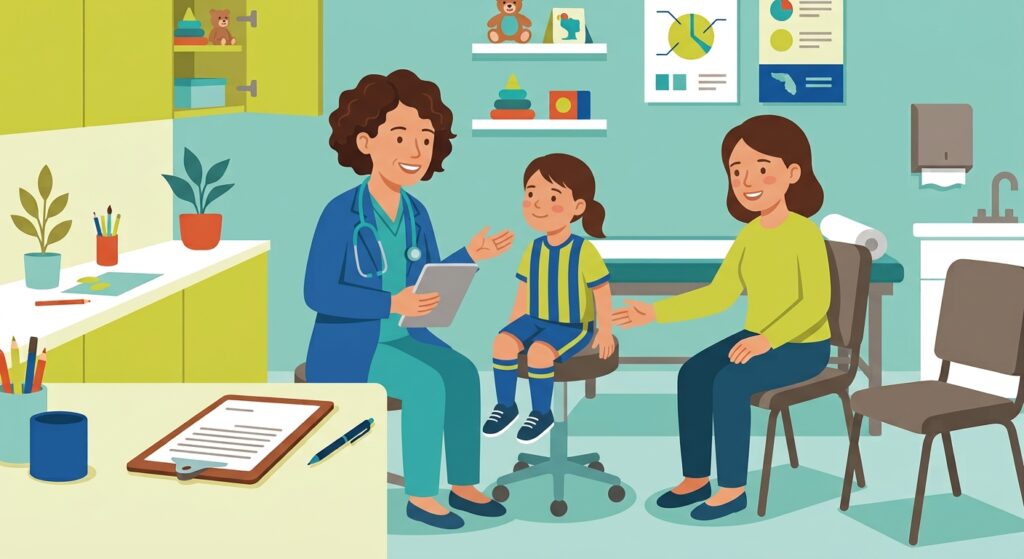
Not by itself. The AAP’s guide on how to choose a pediatrician does not mention ownership at all. It tells parents to ask about things they will feel at every visit. Can you get an appointment on short notice when your child is sick? Does the doctor explain things clearly and answer your questions? Do you feel rushed? Who covers when the office is closed? Will the pediatrician coordinate care if your child needs a specialist?
Ownership matters when it shapes those answers. In an independent office, the doctor in the exam room has the final say on how long visits run, how many sick visits are held open each day, and how the phones get answered. In a larger organization, some of those choices may be made outside the office, by a regional manager or a parent company.
That can work out well or poorly for families. It depends on the organization. This is why I tell parents to judge the practice in front of them and not the label.
Why Seeing the Same Care Team Matters
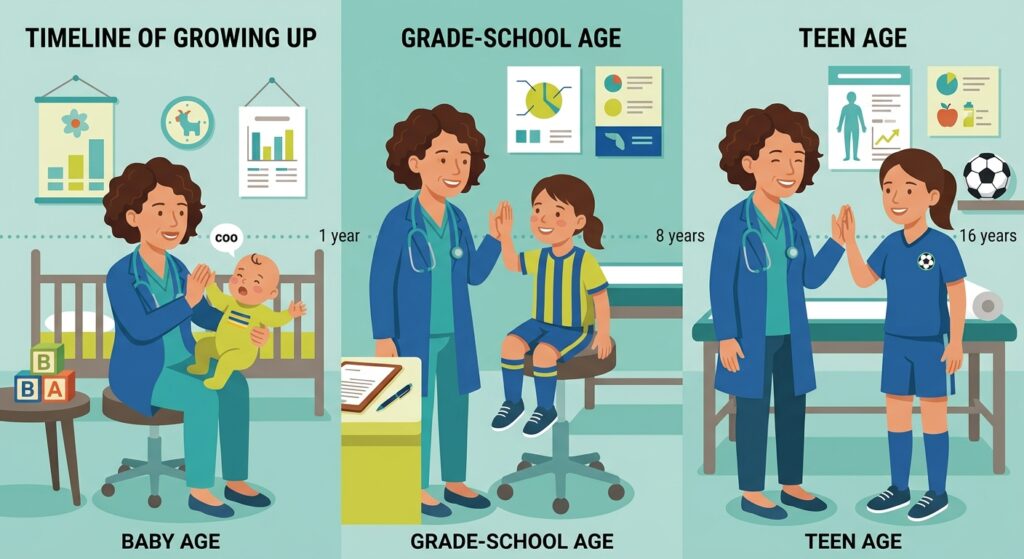
The AAP describes the ideal setup for a child’s care as a medical home. It is not a building. It is a partnership between you, your child, and a care team that knows you. One part of that is continuity. Ideally, the same team cares for a child over the years.
I see why that matters every day. Children change fast, and many concerns only make sense next to what came before. The CDC describes developmental monitoring as watching how a child grows and changes over time, with your child’s doctor checking on milestones at each well-child visit. That is easier when the person watching has known your child since they were a baby.
It matters even more for concerns that unfold slowly, such as asthma, eczema, or signs of ADHD. A doctor who knows last year’s story can spot what is new. If you have a concern about your child’s development or behavior, talk to your pediatrician.
Any type of practice can offer this. Ask how likely it is that your child will see the same doctor or small team at most visits.
What Larger Practices Do Well
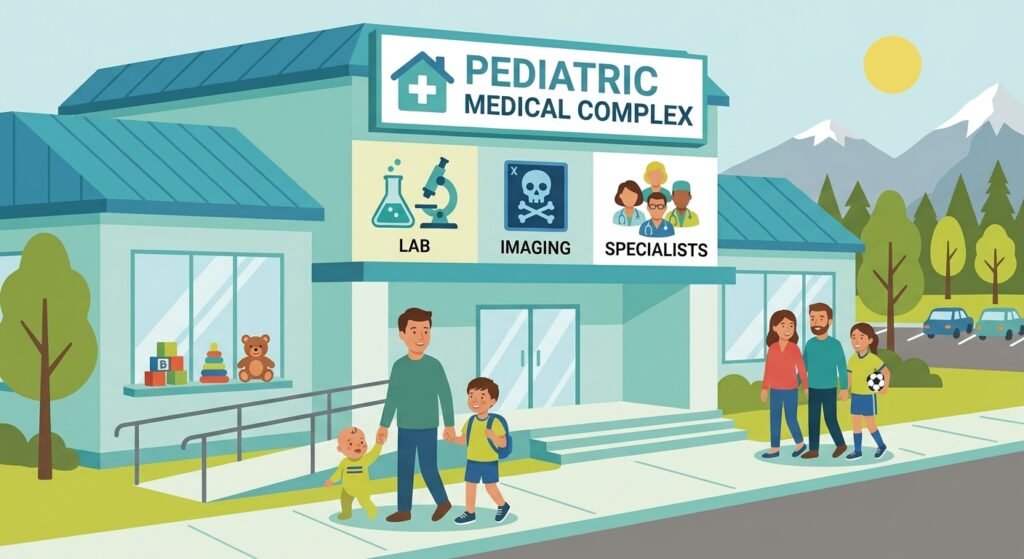
Larger organizations have real strengths, and I want to be fair about them. They often have more locations and more doctors, and some offer evening or weekend hours. Many have labs, imaging, and specialists in the same system, with one shared medical record. For a child with a complex condition who sees several specialists, that can make life easier.
The AAP is honest about the limits of small offices too. It notes that some pediatric offices have limited resources and capabilities, which is one reason families sometimes need care outside the pediatrician’s office. A small office cannot be everything. What it can do is know your child well and help you get to the right place.
What an Independent Practice Does Well
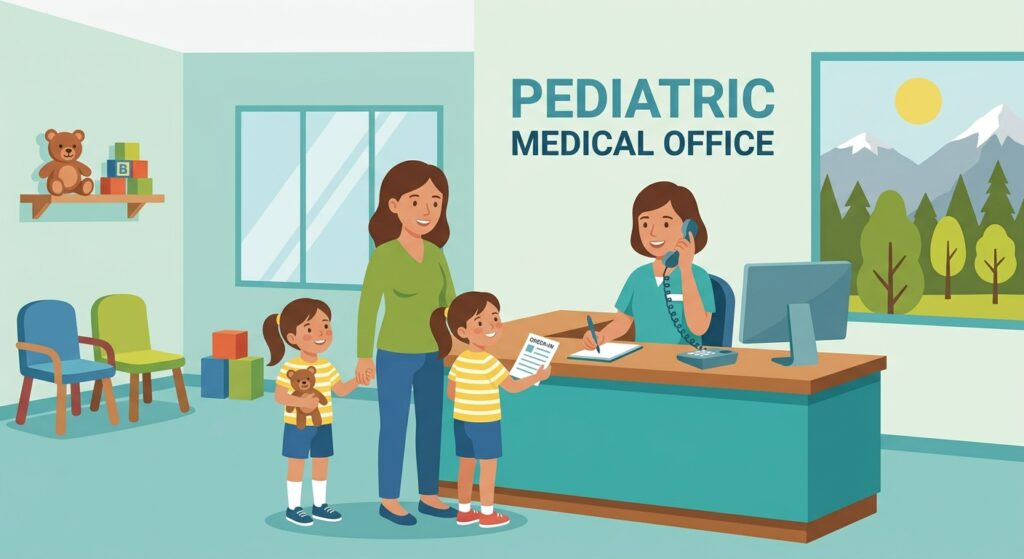
The main advantage is simple. The person making the decisions is in the building, and you can talk to them.
At Alta Loma Pediatrics, that looks like this. We reserve appointment slots each day for sick children, and we offer same-day or next-day sick visits. Our team picks up the phone. Your child is seen by a small group that works closely together: me, our nurse practitioner Jaslie Chhean, and our physician assistant Kimmy Nguyen. You can meet our care team here.
Independent does not mean out of network. We accept most major insurance plans, including Medi-Cal and IEHP, and we welcome families without insurance. We provide newborn and inpatient hospital care at San Antonio Regional Hospital. And we see patients from birth through age 21.
Where Urgent Care and Retail Clinics Fit
Urgent care centers and store-based clinics are often part of large companies, so they belong in this conversation. They have a place, especially after hours. But the AAP recommends contacting your pediatrician first whenever possible. Many concerns can be handled safely by phone, and your pediatrician can help you decide where your child should be seen and how quickly.
The AAP also says retail clinics, like those inside pharmacies and big-box stores, are generally not equipped to provide full care for children. For children under age 2, it does not recommend retail clinics, stand-alone telehealth services, or other settings without pediatric expertise. Illness can change quickly in babies and toddlers, and their symptoms are harder to read.
If your child is seen somewhere else, ask the clinic to send a visit summary to your pediatrician. I wrote more about these choices in my guide on when to see a pediatrician. If you are not sure where to take your child, call our office first.
Questions to Ask Any Pediatric Practice
These questions work for any office, large or small. Several come straight from the AAP’s list.
- Who owns the practice, and who decides how the office runs?
- Will my child see the same doctor or small team at most visits?
- Can you see my child on short notice when they are sick?
- Who answers when I call, during the day and after hours?
- Which hospital do you use if my child needs to be admitted?
- Do you take my insurance plan, and what will I pay for a visit?
- If my child needs a specialist, will you coordinate that care?
You can ask these by phone before you ever book a visit. Pay attention to how the answers feel, not just what they are.
Frequently Asked Questions
Is an independent pediatrician more expensive?
What you pay out of pocket depends mostly on your insurance plan. Call the office and your insurance company to confirm that your plan is accepted and what your copay will be.
Is a hospital-owned or corporate practice a bad choice?
No. Excellent pediatricians work in every kind of practice. Ownership is one thing to ask about, along with how fast you can get in, how well the doctor communicates, and whether your child will see a team that knows them.
How can I find out who owns a pediatric practice?
Ask the front desk. A good office will tell you plainly. You can also check the “About” page on the practice’s website.
Can I meet a pediatrician before my baby is born?
Yes. At Alta Loma Pediatrics, we offer a free prenatal visit so expectant parents can tour the office, meet our team, and ask questions. Call us to schedule one.
Is Alta Loma Pediatrics taking new patients?
Yes. We welcome new patients from newborns through young adults. We serve families in Rancho Cucamonga, Alta Loma, Upland, Ontario, Chino Hills, and across the Inland Empire.
When to Call Us
If you are choosing a pediatrician, or thinking about a change, I would be glad to meet your family. Fall is a good time to do it, before cold and flu season is in full swing. Call our office at (909) 581-0008 and ask us any question on the list above. We would rather you choose with confidence than guess.
Dr. Rani Elias, MD, FAAP, is a board-certified pediatrician with over 17 years of experience serving children and families in Rancho Cucamonga and the Inland Empire. He has been recognized with a Certificate of Excellence from San Antonio Regional Hospital for his long-standing commitment to pediatric care in the community.
Disclaimer: This blog post is for informational purposes only and should not replace professional medical advice. Always consult with your pediatrician regarding your child’s health and medical care.