

Wondering if your child’s cough is asthma? Dr. Elias breaks down triggers, treatment, and when to call — from our Rancho Cucamonga practice.
If your child has a cough that won’t quit, or seems to run out of breath faster than their friends at recess, you’ve probably typed “is this asthma?” into a search bar late at night. You’re not alone. Asthma is one of the most common chronic conditions I manage in kids, and it’s also one of the most misunderstood — because it doesn’t always look like the wheezing, gasping scene you picture.
What Asthma Actually Is (and Why It’s So Easy to Miss)
Asthma is a chronic condition where the airways in your child’s lungs stay a little inflamed and extra-sensitive, even when they seem fine on the outside. When something irritates those airways — a virus, allergens, smoke, cold air — they narrow and swell further, making it harder to breathe. That’s what shows up as coughing, wheezing, chest tightness, or shortness of breath.
Here’s the part that surprises a lot of parents: not every child with asthma wheezes. Some kids just have a persistent cough, especially at night or during a cold, with no obvious whistling sound at all. Because there’s no single symptom pattern that fits every child, asthma can be genuinely tricky to diagnose. That’s why, when I suspect it, I lean heavily on your child’s history — how often the cough shows up, whether it wakes them at night, whether it flares with exercise, and whether allergies or asthma run in the family. For kids age 7 and up, we can also use breathing tests like spirometry to measure how well air is moving through the lungs; younger children are usually diagnosed based on symptom patterns alone, since they’re often too young to do formal lung function testing.
Common Asthma Triggers We See in the Inland Empire
Every child’s triggers are a little different, but a few come up again and again in our exam rooms:
Viral colds are the single most common trigger — any respiratory virus can set off a flare, and it’s often what turns a “simple cold” into a week of coughing and wheezing. Outdoor allergens matter a lot here too: our valley gets real seasonal pollen swings, and windy days can stir up dust and pollen together. Dry, cold air — including our occasional cold winter mornings — can irritate the airways on its own, even without a cold or allergy involved.
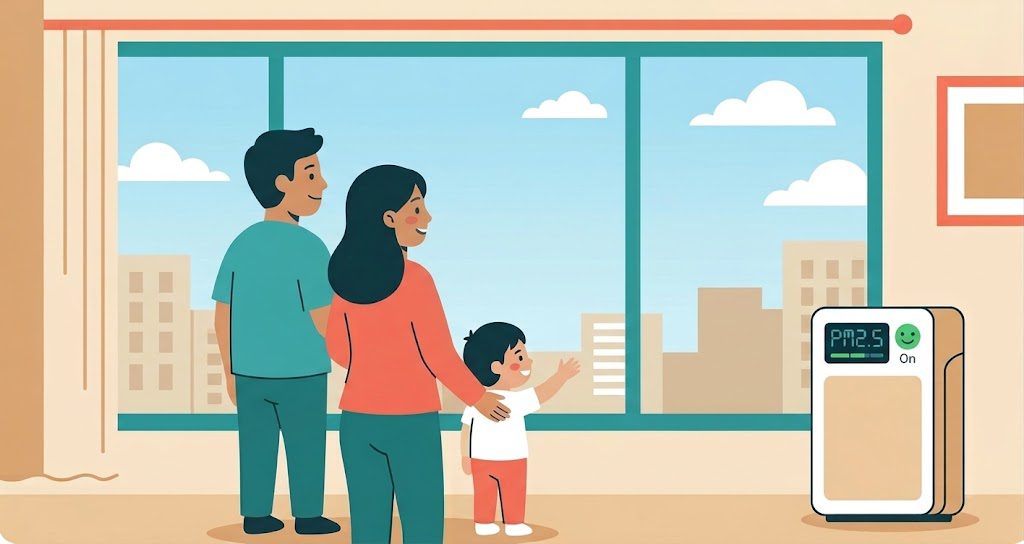
Then there’s smoke. Wildfire season is a real asthma trigger in Southern California, and it deserves its own plan. On days when the air quality index is orange (over 100) or red (over 150), it’s genuinely not safe for a child with asthma to be outside for long, and that includes recess and sports practice (HealthyChildren.org). I recommend checking your local air quality before school drop-off on smoky days, keeping windows closed and the AC on recirculate, and using a HEPA air purifier in your child’s bedroom if you have one. If your child’s rescue inhaler isn’t cutting it on a smoky day, that’s worth a call to us, not just waiting it out.
Indoor allergens — dust mites, pet dander, mold — and stress or anxiety can also play a role in how well-controlled a child’s asthma is from week to week.
Rescue Inhalers, Daily Controllers, and Getting the Technique Right
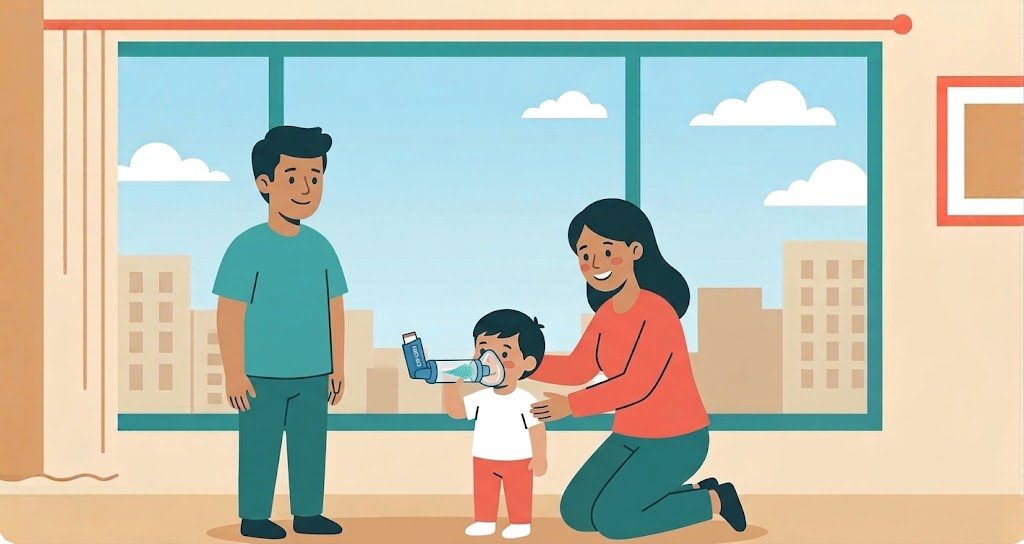
Most kids with asthma end up on one or two types of medication. A rescue (quick-relief) inhaler opens the airways fast when symptoms flare — it’s the one you reach for during a cough attack or before a soccer game. A daily controller medication works in the background to keep the airways calmer over time, so flares happen less often in the first place.
One rule of thumb I share with families: if your child is reaching for their rescue inhaler more than twice a week, or waking up with symptoms more than twice a month, that’s usually a sign the daily plan needs adjusting — not a sign to just use more rescue medicine (HealthyChildren.org). It’s also worth checking technique. A spacer (the plastic tube that attaches to an inhaler) makes a huge difference in how much medicine actually reaches your child’s lungs instead of the back of their throat, and I check spacer technique at almost every asthma visit, even with kids who’ve been using one for years.
Asthma, Sports, and School

Asthma should not keep your child on the sidelines. Kids with asthma are encouraged to take part in PE and sports, and a well-managed plan shouldn’t stand between your child and a full athletic career. Exercise brings on symptoms for most people with asthma at some point, but that’s manageable — using a rescue inhaler about 10 to 15 minutes before activity usually prevents the flare before it starts.
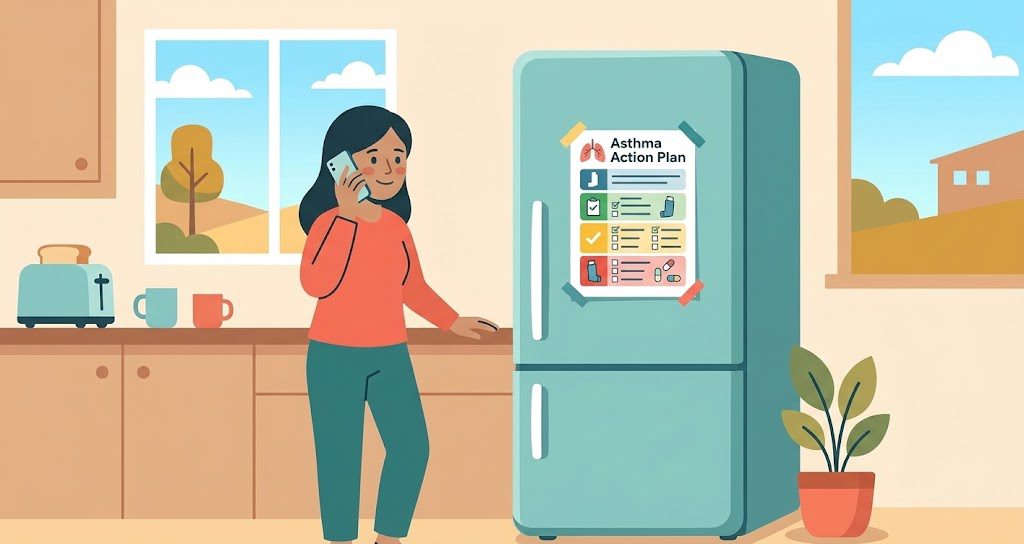
An asthma action plan is one of the most useful tools we put together at a visit. It’s a simple written guide — what medication to use daily, what to do when symptoms start, and when to seek help — that you can share with your child’s school nurse, teacher, and coaches so everyone is on the same page. If your child doesn’t have one yet, that’s a great reason to schedule a checkup.
When to Call Us, When to Go to Urgent Care, and When It’s a 911 Emergency
Most asthma flares can be handled at home with the plan we’ve built together. But it helps to know exactly where the lines are, so you’re never guessing in the moment:(For symptoms outside of asthma too, our general guide on when to see a pediatrician walks through the same kind of triage.)
Call 911 right away if your child is struggling to breathe, can’t speak in full sentences, seems drowsy or confused, or their lips or face look bluish.
Go to the emergency room now if breathing is severely labored, you can see the skin pulling in around their ribs with each breath, rescue medication isn’t helping within 20 minutes, or this flare looks like a past one that led to hospitalization.
Call our office right away if your child has moderate symptoms — chest tightness, wheezing that hasn’t let up 20 minutes after rescue medicine, breathing that’s noticeably faster than normal, or they need rescue medicine more often than every four hours.
Call us within 24 hours for a persistent cough without breathing trouble, mild wheezing lasting three or more days, or if asthma is starting to interfere with school, sleep, or play.
Schedule a routine visit if your child doesn’t have an asthma action plan yet, needs a spacer, has missed school because of asthma, or hasn’t been seen for it in over a year.
Frequently Asked Questions
Is it safe for my child to use their inhaler every day? Yes. Daily controller medications are designed for regular, long-term use and are considered safe and effective when taken as prescribed. The goal of a daily medication is actually to reduce how often your child needs rescue medicine.
My child only coughs at night — could that still be asthma? It’s possible. Nighttime cough without daytime wheezing is a common asthma presentation that gets missed because parents (understandably) picture asthma as a daytime, wheezing-heavy condition. Mention it at your next visit.
Do air purifiers actually help with asthma? A HEPA air purifier can reduce indoor particles like smoke, dust, and pet dander, which may help on high pollution or wildfire smoke days. It’s a helpful layer, not a replacement for medication or an action plan.
When to Call Us
If your child’s cough, wheeze, or breathing has you wondering whether it’s asthma — or if their current asthma plan doesn’t feel like it’s working — call our office at (909) 581-0008, or visit our home page to learn more about our practice. We offer same-day sick visits, and as an independent, physician-owned practice, we’d always rather talk it through with you than have you spend the day worrying.
Dr. Rani Elias, MD, FAAP, is a board-certified pediatrician with over 17 years of experience serving children and families in Rancho Cucamonga and the Inland Empire. He has been recognized with a Certificate of Excellence from San Antonio Regional Hospital for his long-standing commitment to pediatric care in the community.
Disclaimer: This blog post is for informational purposes only and should not replace professional medical advice. Always consult with your pediatrician regarding your child’s health and medical care.