
If your child plays a sport, you probably know this moment. The season is about to start, there’s a sports physical form sitting in the backpack that needs a doctor’s signature, and you’re wondering how quickly you can get an appointment.
I’m Dr. Rani Elias, a board-certified pediatrician with over 17 years of experience caring for children and families here in Rancho Cucamonga and the Inland Empire. Sports physicals come up a lot in our office, and parents usually want to know the same few things: what actually happens at the visit, how early to book it, and whether it matters where you go.
So I put together this guide to walk you through it, and to help you feel ready before you come in.
What is a sports physical?
A sports physical is a checkup that looks at whether your child can play safely. Doctors call it a preparticipation physical evaluation, or PPE. It has two parts: a health history and a physical exam.
It is not only for varsity athletes. The American Academy of Pediatrics (AAP) points out that kids who dance, skateboard, hike, or perform in the school musical put real demands on their bodies, and they benefit from the same visit. You can read the AAP’s guidance for parents on HealthyChildren.org.
What happens during a sports physical?
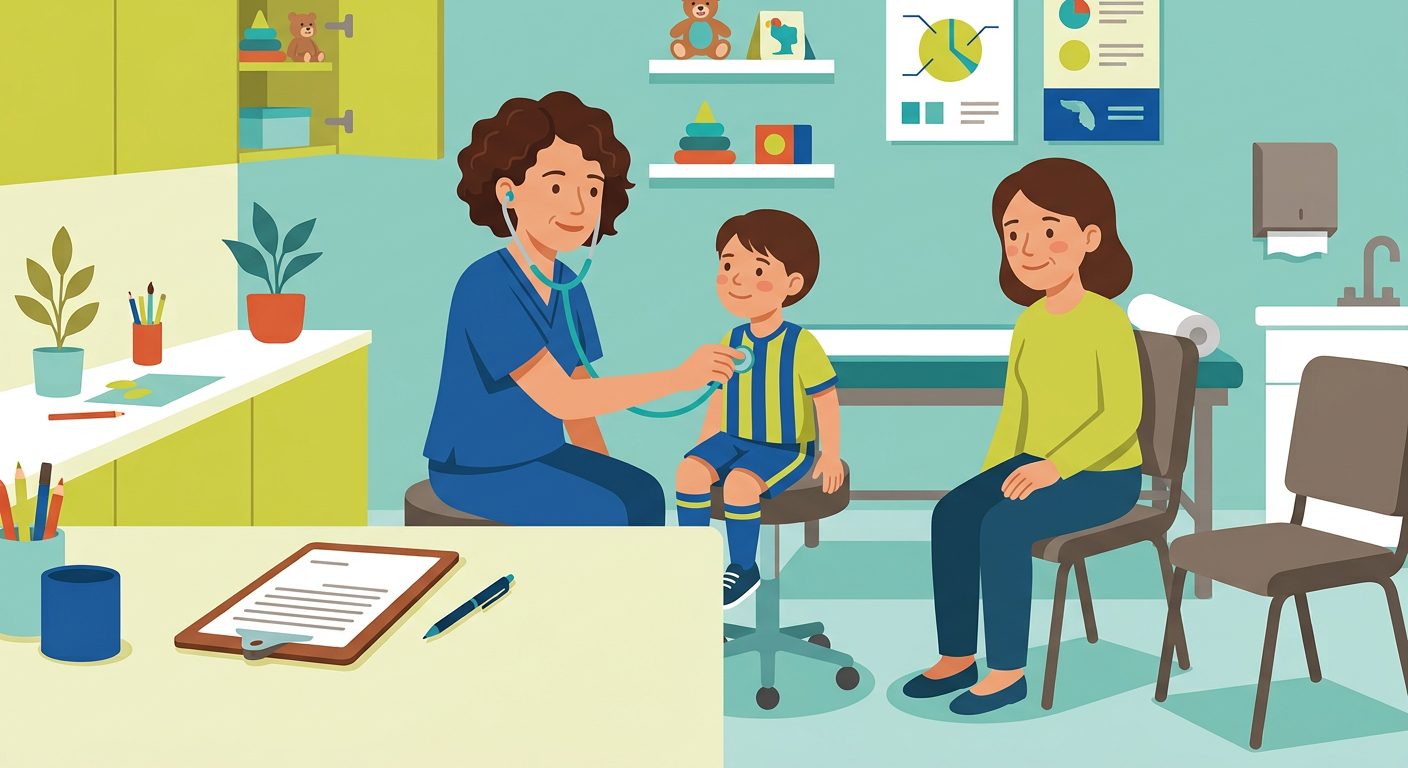
The history comes first, and it matters more than most parents expect. You and your child fill out a form that asks about past injuries, concussions, breathing trouble during exercise, and heart symptoms such as chest pain or fainting. It also asks about heart problems in the family. The AAP asks families to answer honestly and completely, especially the heart and family history questions.
Then comes the exam. We measure height, weight, and blood pressure, and we check vision. We listen to the heart and lungs. We look at the skin, test strength and balance, and watch how the joints move. The AAP’s exam form also includes a short check-in on mental health.
That last part surprises some families. Stress, sleep, mood, and focus are part of an athlete’s health, and the pressure to perform can be heavy. Teens often get a few minutes to talk with the provider privately. If focus is already a concern at home or at school, my post on the signs of ADHD in children may help.
When should you schedule a sports physical?

The AAP recommends booking at least six to eight weeks before the season starts. The extra time has a purpose. If we find something that needs a closer look, such as an old ankle injury that still hurts, there is room to sort it out before the first practice.
For a spring sport, six to eight weeks ahead lands around the winter holidays. That is an easy month to forget a form. If your child plays in winter or spring, now is a good time to call.
Already inside that window? Call anyway. Same-day and next-day appointments are often available at our office.
How often your child needs a new physical depends on state rules and on the school or league. Ask the athletic office how recent the exam has to be and which form they want.
Why see your pediatrician instead of urgent care?

A quick clinic visit can get a form signed. It cannot tell the provider what happened at last year’s checkup.
The AAP is against sports physicals done in mass settings, like a school gym, or in urgent care. Those places often lack privacy, and the provider does not know your child or have their past records. For our patients, we already have growth, vaccines, past injuries, and asthma or allergy history in front of us.
The AAP also suggests asking for the sports physical when you schedule your child’s yearly well visit. One appointment covers both, and we can catch up on vaccines at the same time.
If your child does get a physical somewhere else, ask that clinic to send us the record so the chart stays complete.
What if the doctor finds a problem?
Most kids are cleared to play with no restrictions. The AAP notes that even among athletes sent to a heart specialist for a closer look, most are still cleared.
“Not cleared yet” usually means “let’s check one more thing.” The goal is a safe way for your child to play.
Here is a made-up example. A 13-year-old soccer player coughs hard about ten minutes into every practice. Her parents assume she is out of shape. At her sports physical, that detail leads to a conversation about whether exercise is triggering asthma symptoms. The AAP says children with asthma should be able to play sports and should be encouraged to. It also says being out of shape can look a lot like asthma. Telling the two apart takes an exam, so bring that kind of detail to your pediatrician.
Head injuries are the other thing to tell us about, even small ones. A child who has had one concussion is at greater risk for another, according to the AAP. The CDC notes that concussion symptoms may not show up for hours or days. A child with a known or possible concussion should not go back to sports until a health care professional clears them. If your child has had a head injury and you are not sure it has healed, call our office. I cover lingering pain after falls in When to See a Pediatrician.
Heat, smoke, and practice in the Inland Empire
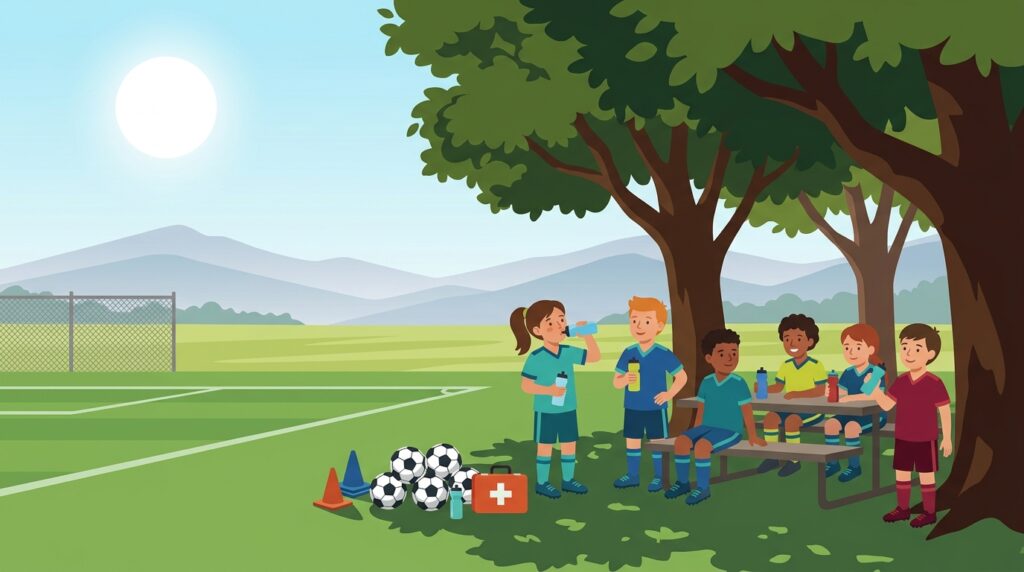
Afternoons here can stay hot well into fall, and smoky days come with the season. Both matter for kids who practice outside.
For heat, the AAP’s advice is to build up slowly. At the start of a season, outdoor activity should increase over 7 to 14 days so the body can adjust. Hard practice is safer outside the middle of the day, with regular water breaks. Muscle cramps, dizziness, headache, or nausea mean stop, cool off, and tell an adult. Confusion or passing out is an emergency. Call 911.
For smoke, check the air quality for your ZIP code at airnow.gov before practice. The AAP warns that children with asthma are at higher risk when the air is smoky. If your child has asthma, ask us about a plan for bad-air days before the season starts.
For drinks, water is enough for activity under an hour. A sports drink can help when play runs longer or the day is very hot. Energy drinks are not recommended for kids, according to the AAP.
If your child has struggled in the heat or with breathing during practice, bring it up at the sports physical or call our office.
What to bring to the appointment
- The sports physical form from your child’s school or league
- The health history section, filled out with your child before the visit
- A list of medicines, including inhalers
- Glasses or contacts, if your child wears them
- Dates and details of past injuries, concussions, or surgeries
- Any heart problems in the family
- Your insurance card
If your school or league did not give you a form, tell us when you call. The AAP publishes a standard one.
Frequently Asked Questions
How long is a sports physical good for?
It depends on state rules and on your child’s school or league. Ask the athletic office before you book, so the date on the form covers the whole season.
Does a sports physical replace the yearly checkup?
No. A sports physical focuses on playing safely. A well-child visit also covers growth, development, and vaccines. The AAP suggests doing both in one appointment.
Does insurance cover a sports physical?
It depends on your plan and on whether the physical is part of a well visit. We accept most major insurance plans and welcome families without insurance. Call our office and we will tell you what to expect.
My child doesn’t play on a team. Do they need one?
The AAP says all kids from middle school through college benefit from one, including kids who are active outside of organized sports.
Can my teenager or college athlete come to a pediatrician?
Yes. We see patients through age 21.
Dr. Rani Elias, MD, FAAP, is a board-certified pediatrician with over 17 years of experience serving children and families in Rancho Cucamonga and the Inland Empire. He has been recognized with a Certificate of Excellence from San Antonio Regional Hospital for his long-standing commitment to pediatric care in the community.
Disclaimer: This blog post is for informational purposes only and should not replace professional medical advice. Always consult with your pediatrician regarding your child’s health and medical care.